
Same Duck, New Clothes
Escaping Baby Duck Syndrome in Engineering Orgs

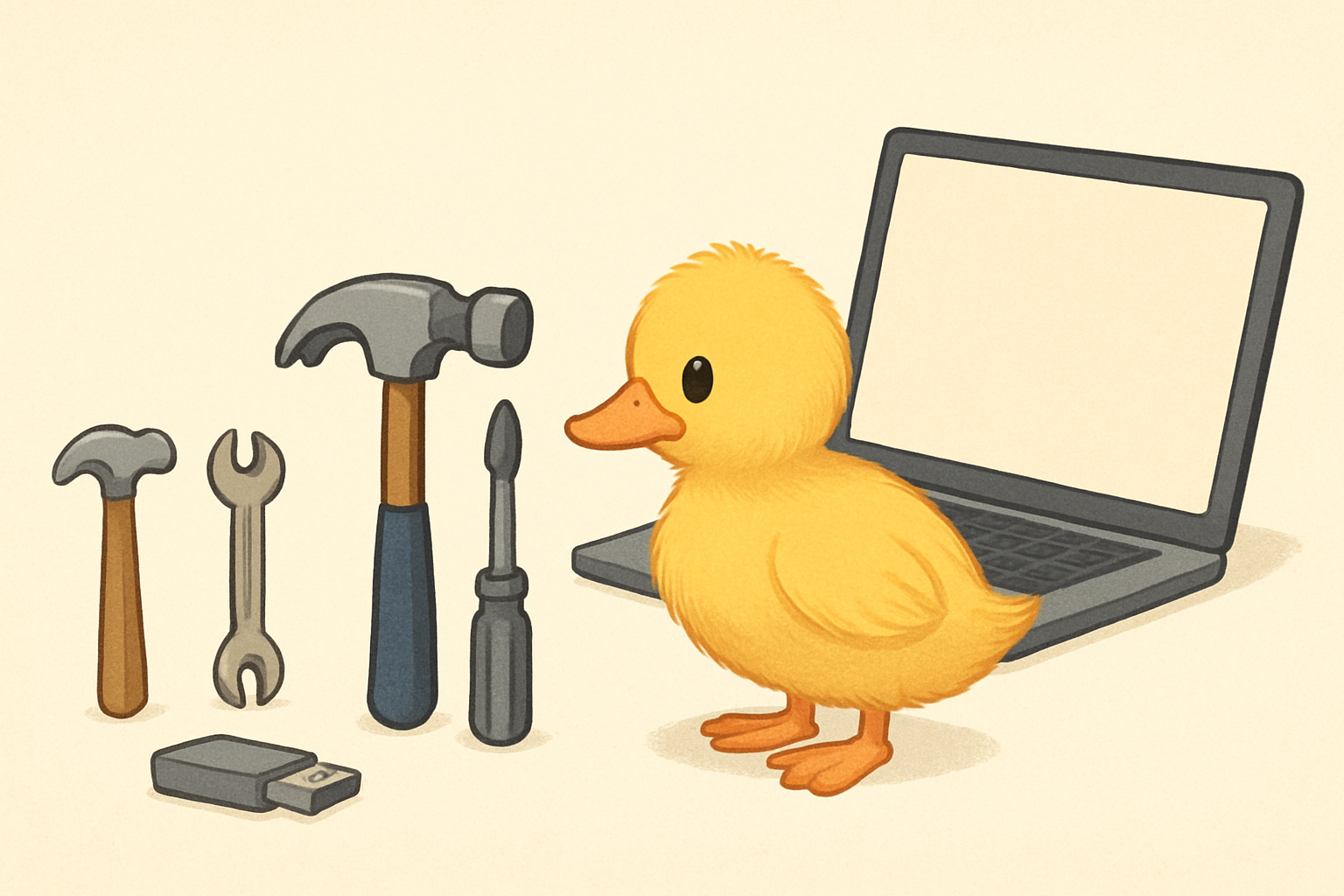
In tech, we pride ourselves on embracing change like new frameworks, faster deploys, smarter systems. But when it comes to how we build, structure, and lead our teams, many organizations fall into a surprisingly conservative trap: we stick to what we know. There’s a term for this — Baby Duck Syndrome — originally used in UX to describe how users imprint on the first interface they encounter. But this tendency to cling to the familiar runs much deeper than UI preferences. It shows up in how we backfill roles, promote leaders, preserve outdated org charts, and cling to early stage operating models long after they’ve outlived their usefulness. In this article, we’ll explore how Baby Duck Syndrome quietly shapes the decisions made in engineering departments and what it takes for leaders to break free.
Definition (UX Origin)🔍
Baby Duck Syndrome refers to a user’s tendency to develop a preference for the first user interface (UI) they learn, and then judge all subsequent interfaces based on that initial experience often reacting negatively to any changes or differences, even if the new interface is objectively better.
Why “baby duck”?🐣
It’s a metaphor based on imprinting in ducklings:
When a duckling hatches, it imprints on the first moving object it sees (usually its mother). It then follows that object instinctively. Similarly, users “imprint” on the first software interface they become familiar with.
Implications in UX💡
Users may reject new designs simply because they’re different not worse.
“This feels wrong” often just means “This is unfamiliar.”
A redesign that improves usability might still frustrate existing users due to the emotional attachment to the old interface.
But what if Baby Duck Syndrome extends beyond user interfaces? What if the same tendency to cling to the familiar is quietly influencing how engineering teams respond to change from adopting new processes to restructuring org charts?
How to identify it w/ examples ⚠️
Hiring
Take hiring decisions as an example. Imagine a company that freezes new hiring but agrees to allow backfilling for roles lost through attrition. On the surface, this sounds pragmatic but it can lead to a subtle trap. Leadership becomes preoccupied with securing headcount instead of questioning whether the original role still aligns with the company’s evolving priorities.
Suppose a DevOps engineer resigns. Rather than blindly backfilling that exact position, what if the business need now points toward scaling a data platform or tackling technical debt in a neglected product area? In such cases, rigid backfilling reflects an attachment to the past not a forward-looking strategy.
This is Baby Duck Syndrome at the organizational level: we imprint on old structures and miss the opportunity to reshape the team for what’s needed next. In an ideal world (and in truly empowered teams that operate beyond political games) engineering and product should act as partners. They should sit at the same table and assess how each open position can best serve both the engineering organization’s evolution and the product strategy’s direction. Decisions about backfilling shouldn’t be about preserving headcount for its own sake, but about shaping the team to meet where the company is going, not where it’s been.
Promotions
Another common example appears in how leadership handles promotions. Consider a scenario where the CTO steps down. Instead of taking a moment to reflect on what kind of leader the company truly needs to reach its next stage (whether that’s scaling, navigating a market shift, or maturing the tech organization) the company simply promotes the next in the hierarchy into CTO role. On the surface, it looks like continuity. In reality, it may just be organizational autopilot — a reshuffling of titles rather than a deliberate investment in future capability.
The structure appears different, but nothing truly new has been introduced. These reflexive promotions can limit a company’s progression and hinder opportunities to bring in fresh perspectives or realign leadership with the company’s evolving strategy. Again, it’s Baby Duck Syndrome —> sticking to what’s familiar, rather than making choices that are right for the moment.
This kind of automatic promotion becomes even more problematic when performance is clearly not aligned with expectations. Imagine promoting someone into a senior leadership role even though they’ve consistently failed to meet their targets. Why does this happen? Often, it’s not because of merit or potential, but because they’re already part of the structure — they know the system, the industry and so on, while they fit the mold leadership is used to. It’s another symptom of Baby Duck Syndrome: promoting out of familiarity, not fitness for purpose.
In doing so, organizations not only reward underperformance, but also signal to the rest of the team that tenure and proximity matter more than impact. This stalls progress, erodes trust, and closes the door to outside perspectives or internal talent that may be more capable but less entrenched. True transformation requires rethinking roles based on what the company needs next, not just who’s been wearing the badge the longest.
Mode of Operation
The same dynamic shows up in how engineering organizations structure their modes of operation. A team might find its “silver bullet” early on, like a process, structure, or rhythm that works beautifully in a small startup. But as the company grows in headcount with global engineering team(s), spanning multiple time zones and product lines, those same patterns can quietly become constraints. Leaders stick to what worked “back when it was just us,” even if the scale, complexity, and context have changed dramatically.
What was once a strength becomes a source of inertia. Without evolving the way decisions are made leaders may find themselves unable to unlock the full potential of their teams. They lose the agility to respond to new challenges, unable to delegate effectively or introduce new layers of autonomy. Again, it’s the Baby Duck Syndrome at play: a reluctance to revisit the operating model because the original imprint still feels right, even if it no longer serves the company’s future.
Why This Is a Problem🤔
At first glance, Baby Duck Syndrome might seem harmless and even comforting. Familiar tools, people, structures, and habits can create stability. But in fast-moving tech organizations, stability without evolution becomes plateau. When we make decisions based on what worked in the past rather than what’s needed now, we block progress in three critical ways:
We limit adaptability.
Clinging to legacy structures, roles, or processes reduces the organization’s ability to respond to new market realities, technological shifts, or internal growth challenges.We reward familiarity over merit.
Promoting based on tenure or closeness, instead of performance and fit, sends the wrong signal to the team. It erodes trust, kills motivation, and sidelines emerging leaders.We miss the bigger picture.
When engineering and product leaders optimize for headcount preservation or internal politics rather than business outcomes, we create brittle systems. Systems that look functional but can not scale, pivot, or innovate when it matters most.
In short, Baby Duck Syndrome prevents us from doing the hard but necessary work of reimagining. Reimagining roles, teams, processes, and structures — not because change is trendy, but because growth demands it. It lulls leadership into a false sense of security, when what the company actually needs is strategic discomfort, the kind that precedes real evolution.
How to Break Free from Baby Duck Syndrome 🏃♀️

Recognizing the syndrome is only the first step. The harder and more important work is rewiring how we lead, hire, promote, and structure teams. Here are some ways leaders can begin to break free:
Ask: “Does this still serve us?”
Every time a role is backfilled, a team is reorged, or a process is preserved out of habit, pause and ask:
“Was this designed for the company we were or the company we’re becoming?”
This simple question creates space for strategic thinking instead of reflexive action.
Decouple performance from presence.
Just because someone has been “around forever” doesn’t mean they’re the right fit for the next chapter. Reassess leadership potential and performance based on forward-looking criteria, not just historical familiarity.
Design promotions and backfills around future value.
Use attrition as an opportunity to rebalance. When someone leaves, don’t default to replacing them 1:1. Instead, ask what role or capability will create the most value for the company today and tomorrow.
Rethink the operating model regularly.
What worked for 10 engineers may not work for 100 across three continents. Create feedback loops (like org health reviews or team charter retros) that help you surface where process and structure have become legacy baggage.
Strengthen the product&engineering partnership.
Resist the political game of headcount defense. Build trust between product and engineering so they can jointly assess what the org truly needs not what feels safest.
Invite fresh perspectives even when it’s uncomfortable.
Sometimes the best way to evolve is to bring in someone who hasn’t “grown up” inside the current system. Don’t be afraid to hire externally for leadership roles when internal candidates don’t align with the company’s future direction.
Final Thoughts👻
Breaking free from Baby Duck Syndrome isn not about change for change’s sake. It’s about having the courage to confront legacy patterns, question automatic decisions, and build structures that serve the future not just repeat the past.
Engineering leadership isn’t just about solving problems. It’s about knowing which problems are still worth solving and which ones we’ve simply gotten used to.